


July Moth trapping
- Anton Foreman
- Jul 6, 2025
- 2 min read

After fairly poor moth numbers we put the light trap out to see if things had improved with a bit more moisture in the air. Like a lot of living things extremes do not work well; too wet, to dry, cold or hot has an impact on our moths. Due to rain overnight expected I putbghe trap under cover with the white sheet hung behind to get as much reflective light.
The numbers and variety of moths are important to the biodiversity of our environment, birds will feed their young on the numerous caterpillars present, a failed moth population will also reduce our local resident species from Blue Tit to Tree Creeper. Bats depend on moths on the wing, and the Trust has several species present.

We turned the light off at first light, early, 4.30am, and examined the sheet for the moths that hadn't entered the trap. Numerous species clung to the sheet.....


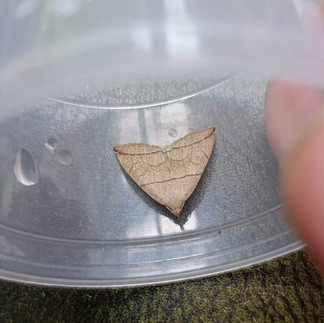
The above is a smallish moth called a GOLD TRIANGLE, here sat in the two stances. These feed on dry material such as hay.


Left to right above, all classified as micro moths, BROWN SPOT GREY, BIRD CHERRY ERMINE, THISTLE STRAW


Left to right....July High flyer, Scalloped Oak, Brimstone
Other moths present.....




From top left....Mottled Beauty, Small Fan Foot, Double Square Spot, bottom ....Beautiful Hooktip, Small Fan -footed Wave, Small Magpie
By catch, the light trap also pulls in Sexton Beetles, a type of burying beetle that lays its eggs on carrion and slowly buries the carcass

This is an Ichneumon Wasp, these lay eggs on or in larvae of other insects...


Comments